

Complex Trauma
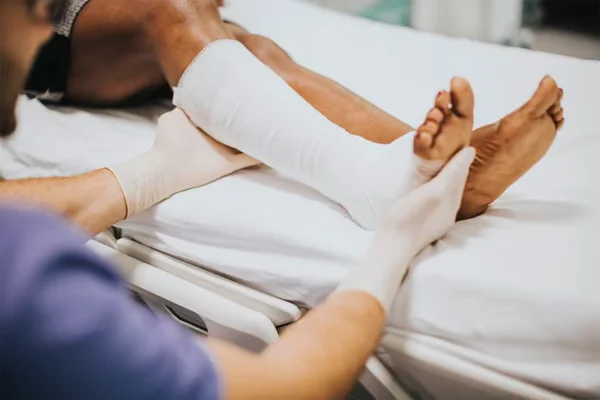
Complex Trauma and Fracture Surgery in Faridabad
Complex trauma can involve severe fractures, multiple injuries, significant soft-tissue damage and injuries around major joints. These cases often require detailed assessment, careful surgical planning and coordinated management to restore bone alignment, joint function and limb stability.
Dr. Ananya Sharma provides evaluation and surgical management of complex orthopaedic trauma in Faridabad, including pelvic and acetabular fractures, complex tibial plateau injuries, periprosthetic fractures, pilon fractures, floating joint injuries, open fractures and complex periarticular fractures.
Treatment is planned according to the injury pattern, soft-tissue condition, associated injuries, bone damage and the patient's overall health.
What Is Complex Orthopaedic Trauma?
Complex orthopaedic trauma generally refers to injuries where fractures or soft-tissue damage are extensive, involve important joints or occur alongside multiple injuries.
These injuries can result from road traffic accidents, falls from height, sports trauma, industrial accidents and other high-energy mechanisms.
Complex trauma may involve:
-
Multiple fractures
-
Joint surface damage
-
Ligament and soft-tissue injuries
-
Open fractures
-
Bone loss
-
Vascular or nerve-related complications
-
Fractures around existing implants
-
Multiple-system injuries
Treatment may require staged procedures rather than a single operation. The priority is to stabilize the patient, protect soft tissues and establish a safe pathway toward definitive reconstruction.
Pelvic Ring Injuries and Acetabular Fractures
Pelvic and acetabular fractures are among the more challenging injuries treated in orthopaedic trauma. The pelvis supports the body and contains important blood vessels, nerves and internal organs, while the acetabulum forms the socket of the hip joint.
Pelvic Ring Injuries
Pelvic ring injuries can occur after high-energy trauma and may range from relatively stable fractures to severe disruptions involving multiple components of the pelvic ring.
Treatment depends on fracture stability, displacement, associated injuries and the patient's overall condition.
Acetabular Fractures
Acetabular fractures involve the socket of the hip joint. Because the joint surface needs accurate restoration, surgical planning is particularly important in displaced or complex fractures.
Open Reduction and Internal Fixation (ORIF) may be required in appropriately selected cases to restore alignment and stabilize the fracture.
Complex Tibial Plateau Fractures
Tibial plateau fractures involve the upper surface of the shin bone and can extend into the knee joint. Complex fractures may involve multiple fragments, significant displacement, joint surface depression and soft-tissue injury.
Surgical treatment may require specialized approaches depending on the fracture pattern.
Posteromedial Approach
A posteromedial approach can provide access to fractures involving the posterior and medial portions of the tibial plateau when this approach is appropriate for the fracture configuration.
Posterolateral Approach
Posterolateral fractures may require a specialized approach to address the affected portion of the joint and provide appropriate fixation.
Combined Approaches
Some complex tibial plateau fractures involve multiple columns and may require combined approaches to achieve adequate reduction and stable fixation.
The timing of surgery is also important. Significant swelling and soft-tissue injury may require temporary stabilization before definitive fixation.
Periprosthetic Fractures Around Hip and Knee Implants
A periprosthetic fracture occurs around or near an existing joint replacement implant. These fractures can be challenging because the treatment must account for the fracture pattern, implant stability and available bone stock.
Periprosthetic fractures may occur around:
-
Hip replacement implants
-
Knee replacement implants
-
Femoral components
-
Tibial components
-
Areas adjacent to previous fixation
Treatment planning generally requires detailed imaging and assessment of the existing implant. Depending on the condition of the implant and fracture, treatment may involve fixation, revision arthroplasty or a combination of procedures.
Pilon Fractures and Complex Ankle and Hindfoot Injuries
Pilon fractures involve the lower end of the tibia and frequently extend into the ankle joint. They are often caused by high-energy trauma and may be associated with significant swelling and soft-tissue damage.
Because the ankle joint surface can be severely affected, treatment requires careful evaluation of fracture alignment, joint involvement and soft-tissue condition.
Complex ankle and hindfoot injuries may also involve the talus, calcaneus and surrounding structures. Treatment may require staged fixation, specialized surgical approaches and prolonged rehabilitation.
Protecting the soft tissues is a major consideration in these injuries.
Floating Knee and Floating Elbow Injuries
A floating joint injury generally refers to fractures occurring on both sides of a major joint, resulting in a segment of the limb becoming mechanically disconnected from the rest of the limb.
Floating Knee
A floating knee may involve fractures of the femur and tibia around the knee. These injuries commonly result from high-energy trauma and may occur with additional injuries elsewhere in the body.
Treatment priorities include overall patient stabilization, assessment of soft-tissue and neurovascular status and appropriate fracture stabilization.
Floating Elbow
Floating elbow injuries involve fractures of the humerus and forearm bones around the elbow. Because the elbow is a complex joint, restoration of alignment and stability is important for functional recovery.
Management depends on the fracture pattern, soft-tissue injury and associated damage.
Polytrauma Management and Damage Control Orthopaedics
Polytrauma refers to severe injuries affecting multiple regions or body systems. Orthopaedic injuries may occur alongside head, chest, abdominal or vascular trauma.
In critically injured patients, immediate definitive fracture reconstruction may not always be appropriate. Damage Control Orthopaedics (DCO) focuses on rapid stabilization while minimizing the additional physiological stress of extensive surgery.
Initial management may involve:
-
Temporary fracture stabilization
-
External fixation when indicated
-
Control of bleeding
-
Protection of soft tissues
-
Management of associated injuries
-
Monitoring of the patient's physiological condition
Once the patient's condition becomes suitable for definitive treatment, reconstruction or internal fixation can be planned.
This staged approach is particularly important in severely injured patients where prolonged surgery may increase physiological risk.
Open Fractures With Soft-Tissue Loss
An open fracture occurs when a fracture communicates with the external environment through a wound. These injuries have a higher risk of infection and may involve substantial damage to skin, muscle, blood vessels and other soft tissues.
Management requires urgent assessment and appropriate treatment of the wound and fracture.
Depending on the injury, staged reconstruction may involve:
-
Surgical wound cleaning and debridement
-
Temporary stabilization
-
Antibiotic treatment
-
Soft-tissue coverage
-
Definitive fracture fixation
-
Bone reconstruction where necessary
When there is significant soft-tissue loss, coordination between orthopaedic and reconstructive teams may be required to achieve adequate coverage and fracture healing.
Distal Femur, Proximal Humerus and Complex Periarticular Fractures
Fractures near major joints can be difficult to treat because they involve both the bone and the joint surface.
Distal Femur Fractures
Distal femur fractures occur close to the knee and may extend into the joint. Treatment aims to restore alignment and provide sufficient stability for progressive rehabilitation.
Proximal Humerus Fractures
Proximal humerus fractures involve the upper end of the arm bone near the shoulder. Complex patterns may include multiple fragments, displacement or joint surface involvement.
Treatment depends on fracture configuration, bone quality, age, activity level and the condition of the shoulder.
Complex Periarticular Fractures
Periarticular fractures occur close to or extend into a joint. Accurate restoration of the joint surface and stable fixation are important considerations in their management.
Staged Reconstruction in Complex Trauma
Complex trauma is not always treated through a single operation. Staged reconstruction may be necessary when there is severe swelling, open injury, infection, bone loss or significant physiological instability.
The treatment pathway may involve:
Initial stabilization → Soft-tissue management → Temporary fixation → Definitive reconstruction → Bone healing → Rehabilitation
The timing of each stage depends on the injury and the patient's recovery.
Recovery After Complex Trauma Surgery
Recovery following complex fracture surgery can take significantly longer than recovery from uncomplicated fractures.
Rehabilitation may include:
-
Protected weight-bearing
-
Range-of-motion exercises
-
Muscle strengthening
-
Gait training
-
Joint mobility exercises
-
Progressive loading
-
Functional rehabilitation
The rehabilitation program depends on fracture stability, fixation, soft-tissue healing and the presence of associated injuries.
Regular follow-up is important to monitor bone healing, implant condition, joint function and potential complications.
When Should You Seek Trauma Care?
Urgent orthopaedic assessment is important after significant trauma, particularly when there is:
-
Severe limb pain or deformity
-
Suspected fracture or dislocation
-
An open wound over a fracture
-
Significant swelling
-
Inability to bear weight
-
Multiple injuries
-
Previous joint replacement with a new injury
-
Suspected pelvic or acetabular fracture
-
High-energy road traffic injury
-
Persistent pain or functional limitation after fracture treatment
Complex injuries benefit from early and appropriate assessment because treatment timing can influence soft-tissue health, fracture alignment and long-term joint function.
Why Choose Dr. Ananya Sharma for Complex Trauma in Faridabad?
Complex trauma requires more than fracture fixation alone. The injury pattern, soft tissues, joint involvement, bone quality and associated injuries all need to be considered when planning treatment.
Dr. Ananya Sharma provides evaluation and surgical treatment planning for complex fractures and traumatic orthopaedic conditions in Faridabad. The approach may involve definitive fixation, staged reconstruction, joint-preserving strategies or damage control orthopaedics depending on the patient's clinical condition.
The objective is to restore alignment and stability while protecting soft tissues and supporting the best possible functional recovery.
Frequently Asked Questions
1. What is complex orthopaedic trauma?
Complex orthopaedic trauma includes severe fractures and injuries involving major joints, multiple bones, soft-tissue damage, open wounds, bone loss or fractures around existing implants.
2. What is an acetabular fracture?
An acetabular fracture is a fracture involving the socket portion of the hip joint. Complex or displaced fractures may require surgical fixation to restore joint alignment.
3. Why are tibial plateau fractures considered complex?
Tibial plateau fractures can extend into the knee joint and may involve multiple fragments, joint surface depression and significant soft-tissue injury. Complex patterns may require specialized surgical approaches.
4. What is a periprosthetic fracture?
A periprosthetic fracture occurs around an existing joint replacement or orthopaedic implant. Treatment depends on the fracture pattern, implant stability and available bone.
5. What is damage control orthopaedics?
Damage Control Orthopaedics is a staged approach used in selected severely injured patients. Initial treatment focuses on stabilizing fractures and the patient's overall condition before definitive reconstruction.
6. How are open fractures treated?
Open fractures generally require urgent assessment, wound management, appropriate antibiotics, surgical debridement and fracture stabilization. Severe soft-tissue injuries may require staged reconstruction.
7. Why might complex trauma require multiple surgeries?
Multiple surgeries may be necessary when there is severe swelling, soft-tissue loss, infection, bone loss or physiological instability. Staged treatment allows each aspect of the injury to be addressed safely.
8. Where can I consult Dr. Ananya Sharma for complex trauma in Faridabad?
Patients with complex fractures, polytrauma, open fractures, periarticular injuries or fractures around implants can consult Dr. Ananya Sharma in Faridabad for specialist evaluation and treatment planning.


