

Arthroplasty
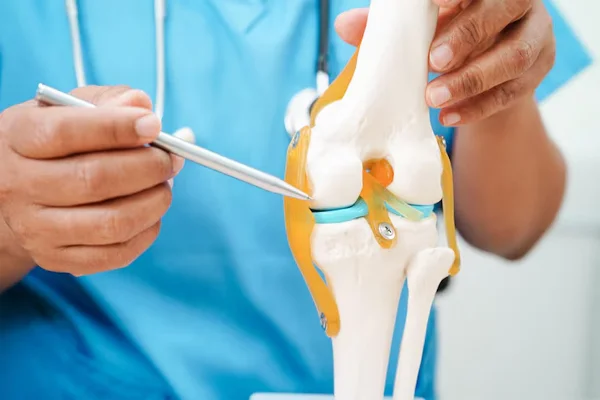
Arthroplasty and Joint Replacement in Faridabad
Arthroplasty, commonly known as joint replacement surgery, is a surgical procedure used to restore function and reduce pain when a damaged joint can no longer provide adequate movement or comfort. Depending on the condition of the joint, arthroplasty may involve replacing part or all of the damaged joint surface with artificial components.
Dr. Ananya Sharma provides comprehensive arthroplasty and joint replacement care in Faridabad, including primary knee and hip replacement, shoulder replacement, partial knee replacement, revision joint replacement and hemiarthroplasty for selected fractures. Treatment is planned after evaluating the patient's symptoms, joint damage, overall health, functional requirements and long-term goals.
What Is Arthroplasty?
Arthroplasty is performed to restore the function of a severely damaged joint. Joint damage may result from osteoarthritis, inflammatory arthritis, previous trauma, fractures, avascular necrosis or other degenerative conditions.
The type of arthroplasty depends on which part of the joint is damaged and how extensively the joint has been affected. Options can include total joint replacement, partial replacement, resurfacing of selected joint surfaces or replacement of a specific component.
Before surgery, the condition of the joint is assessed through clinical examination and appropriate imaging. Non-surgical options may also be considered before proceeding with joint replacement when appropriate.
Primary Total Knee Replacement
Total Knee Replacement (TKR) is a commonly performed arthroplasty procedure for advanced knee joint damage. It involves replacing the damaged surfaces of the knee with artificial components designed to restore joint alignment and function.
Total knee replacement may be considered when severe arthritis causes:
-
Persistent knee pain
-
Difficulty walking
-
Significant stiffness
-
Reduced ability to climb stairs
-
Difficulty performing routine activities
-
Persistent symptoms despite appropriate non-surgical treatment
The procedure involves removing damaged joint surfaces and replacing them with prosthetic components. Proper implant positioning, alignment and soft-tissue balance are important considerations during surgery.
The aim of total knee replacement is to reduce pain, improve mobility and help patients return to daily activities.
Primary Total Hip Replacement
Total Hip Replacement (THR) involves replacing the damaged components of the hip joint with artificial implants. It may be recommended for advanced hip arthritis, certain cases of avascular necrosis, severe joint damage or other conditions causing significant pain and functional limitation.
Common symptoms that may indicate severe hip joint disease include:
-
Persistent groin or hip pain
-
Difficulty walking
-
Pain while climbing stairs
-
Reduced hip movement
-
Difficulty putting on footwear
-
Pain interfering with sleep or daily activities
During total hip replacement, the damaged femoral head is replaced and the damaged socket is resurfaced with prosthetic components.
The treatment plan depends on the patient's age, bone quality, diagnosis, activity level and overall health.
Anatomic and Reverse Shoulder Replacement
Shoulder replacement is used for selected patients with advanced shoulder joint damage when other treatments are no longer providing adequate relief.
Anatomic Shoulder Replacement
Anatomic shoulder replacement attempts to reproduce the natural anatomy of the shoulder joint. It may be considered when the joint surfaces are significantly damaged but the rotator cuff is sufficiently functional to support the replacement.
Reverse Shoulder Replacement
Reverse shoulder replacement changes the normal mechanics of the joint by placing the ball and socket components in reversed positions.
It may be considered in selected patients with conditions such as certain complex shoulder arthritis patterns or severe rotator cuff deficiency where conventional shoulder replacement may not provide adequate function.
The choice between anatomic and reverse shoulder replacement depends on the condition of the joint, rotator cuff, bone quality and other patient-specific factors.
Unicompartmental Knee Replacement
Unicompartmental Knee Replacement (UKR), also known as partial knee replacement, replaces only the damaged compartment of the knee rather than the entire joint.
It may be considered when arthritis is limited to a single compartment and the remaining portions of the knee are sufficiently healthy.
Potential advantages in appropriately selected patients may include:
-
Preservation of healthy knee structures
-
Smaller surgical exposure
-
More natural knee movement
-
Potentially faster functional recovery compared with some total replacement procedures
However, not every patient with knee arthritis is suitable for partial knee replacement. Careful evaluation of the affected compartment, ligament stability, alignment and condition of the remaining joint is necessary.
Revision Hip and Knee Replacement
Joint replacement implants can sometimes develop complications over time. These may include implant loosening, wear, instability, infection, bone loss, fracture around the implant or persistent symptoms.
Revision arthroplasty involves removing and replacing one or more components of a previous joint replacement.
Revision Knee Replacement
Revision knee replacement can be complex because there may be bone loss, scar tissue, ligament instability or problems with the existing implant. Detailed imaging and assessment are required to determine the cause of failure and plan reconstruction.
Revision Hip Replacement
Revision hip replacement may be required for problems such as implant loosening, recurrent dislocation, wear, infection, periprosthetic fracture or significant bone loss.
The complexity of revision surgery depends on the underlying problem and condition of the existing implant and surrounding bone.
Hemiarthroplasty for Femoral Neck Fractures
A femoral neck fracture is a fracture occurring near the upper portion of the thigh bone close to the hip joint. It is particularly important to manage appropriately because certain fractures can compromise the blood supply to the femoral head.
Hemiarthroplasty involves replacing the femoral head while preserving the patient's natural acetabular socket.
It may be considered for selected patients with displaced femoral neck fractures, particularly when the condition of the hip and patient factors make replacement appropriate.
Treatment decisions take into account factors such as age, activity level, bone quality, fracture characteristics and overall medical condition.
When Is Joint Replacement Recommended?
Joint replacement is generally considered when significant joint damage causes persistent pain and functional limitations and appropriate non-surgical treatment has not provided sufficient improvement.
A specialist may evaluate:
-
Severity of joint damage
-
Pain and functional limitations
-
Imaging findings
-
Joint stiffness and movement
-
Previous treatments
-
Overall health
-
Bone quality
-
Activity requirements
-
Expectations from surgery
Joint replacement should not be based solely on an X-ray finding. The decision should consider both the structural condition of the joint and the patient's symptoms and functional needs.
Recovery After Joint Replacement
Recovery after arthroplasty varies according to the joint replaced, surgical technique, overall health and rehabilitation progress.
After surgery, rehabilitation may include:
-
Pain and swelling management
-
Early mobilization
-
Range-of-motion exercises
-
Muscle strengthening
-
Walking and gait training
-
Functional activity training
-
Gradual return to daily activities
The rehabilitation program is adjusted according to the type of replacement and the patient's progress.
Patients undergoing revision arthroplasty or surgery for complex fractures may require a longer and more individualized recovery process.
How Can Joint Replacement Help?
The primary objectives of arthroplasty are to reduce pain and improve joint function. Successful rehabilitation can help patients regain mobility and perform routine activities with greater comfort.
The expected outcome depends on several factors, including the condition being treated, implant selection, surgical technique, rehabilitation and the patient's overall health.
A realistic discussion about expected results, recovery and activity restrictions is an important part of preoperative planning.
Why Choose Dr. Ananya Sharma for Arthroplasty in Faridabad?
Joint replacement requires careful assessment of both the damaged joint and the patient's individual functional requirements. Dr. Ananya Sharma provides evaluation and treatment planning for primary and revision arthroplasty involving the knee, hip and shoulder.
The treatment approach is individualized according to the extent of joint damage, bone and soft-tissue condition, previous surgeries and the patient's long-term mobility goals.
For complex cases, including revision replacement and fracture-related arthroplasty, detailed assessment is important for developing an appropriate surgical strategy and rehabilitation plan.
Frequently Asked Questions
1. What is arthroplasty?
Arthroplasty is a surgical procedure used to restore the function of a damaged joint. It can involve replacing part or all of a joint with artificial components.
2. When is total knee replacement recommended?
Total knee replacement may be considered when advanced knee damage causes persistent pain and functional limitations that do not improve adequately with appropriate non-surgical treatment.
3. What is the difference between total and partial knee replacement?
Total knee replacement replaces the damaged surfaces of the major compartments of the knee, while partial or unicompartmental knee replacement replaces only the affected compartment in appropriately selected patients.
4. What is the difference between anatomic and reverse shoulder replacement?
Anatomic shoulder replacement attempts to reproduce the natural shoulder anatomy. Reverse shoulder replacement changes the joint mechanics and may be suitable for selected patients with severe rotator cuff deficiency or specific types of shoulder joint damage.
5. What is revision joint replacement?
Revision joint replacement is a procedure performed to address a failed or problematic previous joint replacement. It may involve replacing one or more components because of loosening, infection, instability, wear, fracture or other complications.
6. What is hip hemiarthroplasty?
Hip hemiarthroplasty replaces the femoral head while retaining the natural socket. It may be used for selected femoral neck fractures based on the patient's condition and fracture characteristics.
7. How long does recovery after joint replacement take?
Recovery varies according to the joint replaced, type of surgery, health status and rehabilitation. Primary and revision procedures can have significantly different recovery timelines.
8. Where can I consult Dr. Ananya Sharma for joint replacement in Faridabad?
Patients with advanced knee, hip or shoulder joint problems can consult Dr. Ananya Sharma in Faridabad for assessment, treatment planning and evaluation for appropriate arthroplasty procedures


