

Knee Arthroscopy
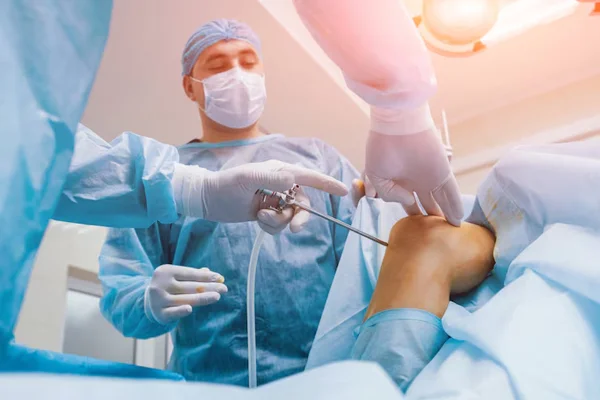
Knee Arthroscopy in Faridabad
Knee arthroscopy is a minimally invasive surgical procedure used to diagnose and treat a wide range of knee conditions, including ligament injuries, meniscus tears, cartilage damage, joint inflammation and certain complex fractures. Using a small camera called an arthroscope and specialized instruments, an orthopaedic surgeon can examine the structures inside the knee and perform precise treatment through small incisions.
Dr. Ananya Sharma provides advanced knee arthroscopy and knee preservation procedures in Faridabad, with treatment planned according to the patient's injury, activity level, joint condition and long-term functional requirements. From sports-related ligament injuries to complex and revision procedures, the treatment approach is selected to restore knee stability, movement and function wherever possible.
What Is Knee Arthroscopy?
Knee arthroscopy involves inserting a small camera into the knee joint through a tiny incision. The images are displayed on a monitor, allowing the surgeon to assess the ligaments, menisci, cartilage and other joint structures in detail.
Additional small incisions may be used to introduce specialized surgical instruments. Depending on the condition, arthroscopy can be used for ligament reconstruction, meniscus repair, cartilage procedures, removal of loose bodies, synovectomy and selected fracture treatments.
Compared with many conventional open procedures, arthroscopic surgery generally involves smaller incisions and may support faster early recovery. However, recovery depends on the procedure performed, the severity of the injury and the individual's rehabilitation program.
ACL Reconstruction
The anterior cruciate ligament (ACL) is important for controlling forward movement and rotational stability of the knee. A torn ACL can cause instability, difficulty with sports and an increased risk of additional knee damage.
ACL reconstruction replaces the damaged ligament with a suitable graft to restore knee stability. Dr. Ananya Sharma may use advanced reconstruction techniques based on the patient's anatomy and injury pattern.
All-Inside ACL Reconstruction
All-inside ACL reconstruction uses specialized techniques designed to minimize bone removal and optimize graft fixation. It may be considered in selected patients based on anatomy and surgical requirements.
Double Bundle ACL Reconstruction
The ACL contains functional bundles that contribute to knee stability. Double bundle reconstruction aims to reproduce the function of these structures more anatomically in appropriately selected cases.
Modified TriLink Technique
Modified TriLink techniques may be used as part of an individualized ligament reconstruction strategy. The choice of technique depends on factors such as the patient's anatomy, ligament injury pattern, activity requirements and associated injuries.
PCL Reconstruction and Repair
The posterior cruciate ligament (PCL) helps prevent excessive backward movement of the tibia. PCL injuries can occur following sports injuries, road accidents or high-energy trauma.
Depending on the severity and location of the injury, treatment may involve PCL repair or reconstruction. Associated injuries are also assessed because PCL injuries may occur along with damage to other knee ligaments.
Multiligament Knee Injury Reconstruction
Severe knee trauma can damage several ligaments simultaneously. Multiligament injuries may involve the ACL, PCL, medial collateral ligament (MCL) and lateral collateral ligament (LCL), resulting in significant instability.
Combined reconstruction may be required when multiple ligaments are substantially damaged. Treatment planning considers the patient's overall condition, soft-tissue status, associated injuries and timing of surgery.
The objective is to restore stability while allowing structured rehabilitation and progressive return of knee function.
Meniscus Repair, Meniscectomy and Meniscal Root Repair
The menisci act as shock absorbers between the thigh bone and shin bone. Tears may result from sports injuries, twisting movements or age-related degeneration.
Meniscus Repair
When the tear pattern and tissue quality are suitable, repairing the meniscus can help preserve its natural function. Preserving meniscal tissue is particularly important in younger and active patients whenever repair is feasible.
Meniscectomy
In selected cases where a damaged portion cannot be repaired, partial meniscectomy may be considered. The goal is to remove unstable damaged tissue while preserving as much healthy meniscus as possible.
Meniscal Root Repair
A meniscal root tear can significantly affect the load-bearing function of the meniscus. Root repair may be recommended in appropriate patients to restore meniscal function and help protect the knee joint from progressive degeneration.
High Tibial Osteotomy and Knee Preservation Surgery
High Tibial Osteotomy (HTO) is a knee-preservation procedure that can be considered in selected patients with certain patterns of medial compartment knee arthritis, malalignment or joint loading problems.
Instead of replacing the knee joint, HTO changes the alignment of the leg to redistribute forces across the knee. Patient selection is important, and factors such as age, activity level, alignment, cartilage condition and ligament stability are evaluated before surgery.
Knee preservation strategies may be particularly relevant when the objective is to maintain the patient's natural joint and delay or avoid joint replacement in appropriately selected cases.
Cartilage Repair
Damage to the articular cartilage can cause pain, swelling, stiffness and difficulty with activity. Depending on the size, location and severity of the cartilage defect, different cartilage restoration techniques may be considered.
Microfracture
Microfracture involves creating small openings in the underlying bone to stimulate a healing response and formation of repair tissue. It may be considered for selected smaller cartilage defects.
OATS
Osteochondral Autograft Transfer System (OATS) involves transferring healthy cartilage and underlying bone from a suitable area to the damaged portion of the joint. It may be appropriate for selected focal cartilage defects.
Chondral Grafting
Chondral grafting techniques aim to restore damaged cartilage surfaces using suitable graft material. The choice depends on the defect, patient characteristics and overall condition of the knee.
Posterolateral Corner Reconstruction
The posterolateral corner (PLC) contains several structures that contribute to rotational and lateral stability of the knee. PLC injuries may occur alongside ACL or PCL injuries, particularly following significant trauma.
When instability persists and non-operative treatment is insufficient, PLC reconstruction may be considered. Correct diagnosis and identification of associated ligament injuries are essential for developing an appropriate surgical plan.
Knee Synovectomy, Plica Excision and Loose Body Removal
Arthroscopy can also be used to address certain conditions affecting the synovial lining and structures within the knee.
Synovectomy involves removing abnormal or inflamed synovial tissue when clinically indicated.
Plica excision may be considered when a symptomatic plica causes persistent irritation and other appropriate treatments have not provided adequate relief.
Loose body removal involves removing fragments of cartilage, bone or other material that may move within the joint and cause pain, catching or restricted movement.
Arthroscopic Management of Tibial Plateau Fractures
Tibial plateau fractures affect the upper surface of the shin bone and may involve the knee joint. Selected fractures can be assessed and managed using arthroscopic assistance, allowing visualization of the joint surface and associated soft-tissue injuries.
The treatment approach depends on fracture pattern, displacement, joint involvement, soft-tissue condition and the patient's overall injury profile. More complex fractures may require open reduction and internal fixation through specialized approaches.
Revision ACL and PCL Reconstruction
A previous ligament reconstruction may occasionally fail because of reinjury, graft failure, tunnel positioning, infection, persistent instability or other technical and biological factors.
Revision ACL or PCL reconstruction requires detailed assessment before surgery. Imaging and evaluation of the previous reconstruction help determine bone tunnel condition, alignment, associated meniscal or cartilage injuries and the appropriate revision strategy.
In some cases, revision surgery may require staged treatment before definitive ligament reconstruction.
Recovery After Knee Arthroscopy
Recovery varies significantly depending on the procedure. A patient undergoing a relatively simple arthroscopic procedure may have a different rehabilitation timeline from someone undergoing ACL reconstruction, multiligament reconstruction, cartilage restoration or fracture fixation.
Postoperative rehabilitation may include pain management, swelling control, range-of-motion exercises, muscle strengthening, gait training and gradual return to activities. Weight-bearing restrictions may also be necessary after certain procedures.
Following the recommended rehabilitation program is an important part of achieving the best possible functional outcome.
When Should You Consider Knee Arthroscopy?
A specialist assessment may be appropriate when knee pain or instability persists after an injury or when symptoms such as the following occur:
-
Recurrent knee instability or giving way
-
Pain after sports or twisting injuries
-
Locking or catching of the knee
-
Suspected meniscus or ligament injury
-
Persistent swelling
-
Restricted knee movement
-
Cartilage-related symptoms
-
Persistent symptoms after previous knee surgery
-
Complications following major knee trauma
Not every knee problem requires surgery. A detailed clinical assessment and appropriate imaging help determine whether rehabilitation, medication, injections or surgery is the most suitable option.
Why Choose Dr. Ananya Sharma for Knee Arthroscopy in Faridabad?
Knee injuries can involve more than one structure, and treatment decisions should consider the complete condition of the joint rather than focusing only on the painful area. Dr. Ananya Sharma provides a structured approach to complex knee conditions, including ligament reconstruction, meniscal procedures, cartilage restoration, knee preservation and revision surgery.
Treatment is planned according to the patient's diagnosis, anatomy, functional goals and long-term joint health. When surgery is indicated, the focus is on restoring stability and function while preserving healthy knee structures whenever possible.
Frequently Asked Questions
1. What is knee arthroscopy used for?
Knee arthroscopy can be used to diagnose and treat conditions such as ACL and PCL injuries, meniscus tears, cartilage defects, synovial problems, loose bodies and selected knee fractures.
2. Is knee arthroscopy suitable for every knee problem?
No. Knee arthroscopy is not required for every knee condition. Treatment depends on the diagnosis, severity of symptoms, imaging findings, age, activity level and response to non-surgical treatment.
3. Can a torn ACL be repaired without reconstruction?
Some ACL injuries may be suitable for specific repair techniques, but many complete tears requiring surgical treatment are managed through ACL reconstruction. The appropriate approach depends on the tear pattern, tissue quality and patient factors.
4. Can a meniscus tear be repaired instead of removed?
Yes, selected meniscus tears can be repaired. When the tear has suitable blood supply, location and tissue quality, repair may help preserve the meniscus. If repair is not possible, limited meniscectomy may be considered.
5. How long does recovery after knee arthroscopy take?
Recovery depends on the specific procedure. Simple arthroscopic procedures may recover relatively quickly, while ACL reconstruction, multiligament surgery, cartilage procedures and fracture treatment require longer rehabilitation.
6. When is revision ACL reconstruction required?
Revision ACL reconstruction may be considered when a previous reconstruction has failed or the knee continues to demonstrate significant instability. Detailed assessment is required to identify the reason for failure and plan appropriate treatment.
7. What is knee preservation surgery?
Knee preservation surgery aims to maintain the patient's natural knee joint rather than immediately replacing it. Procedures such as HTO, meniscus preservation and selected cartilage restoration techniques may be considered in appropriate patients.
8. Where can I consult Dr. Ananya Sharma for knee arthroscopy in Faridabad?
Patients seeking evaluation for knee ligament injuries, meniscus problems, cartilage damage, sports injuries or complex knee conditions can consult Dr. Ananya Sharma in Faridabad for individualized assessment and treatment planning.


